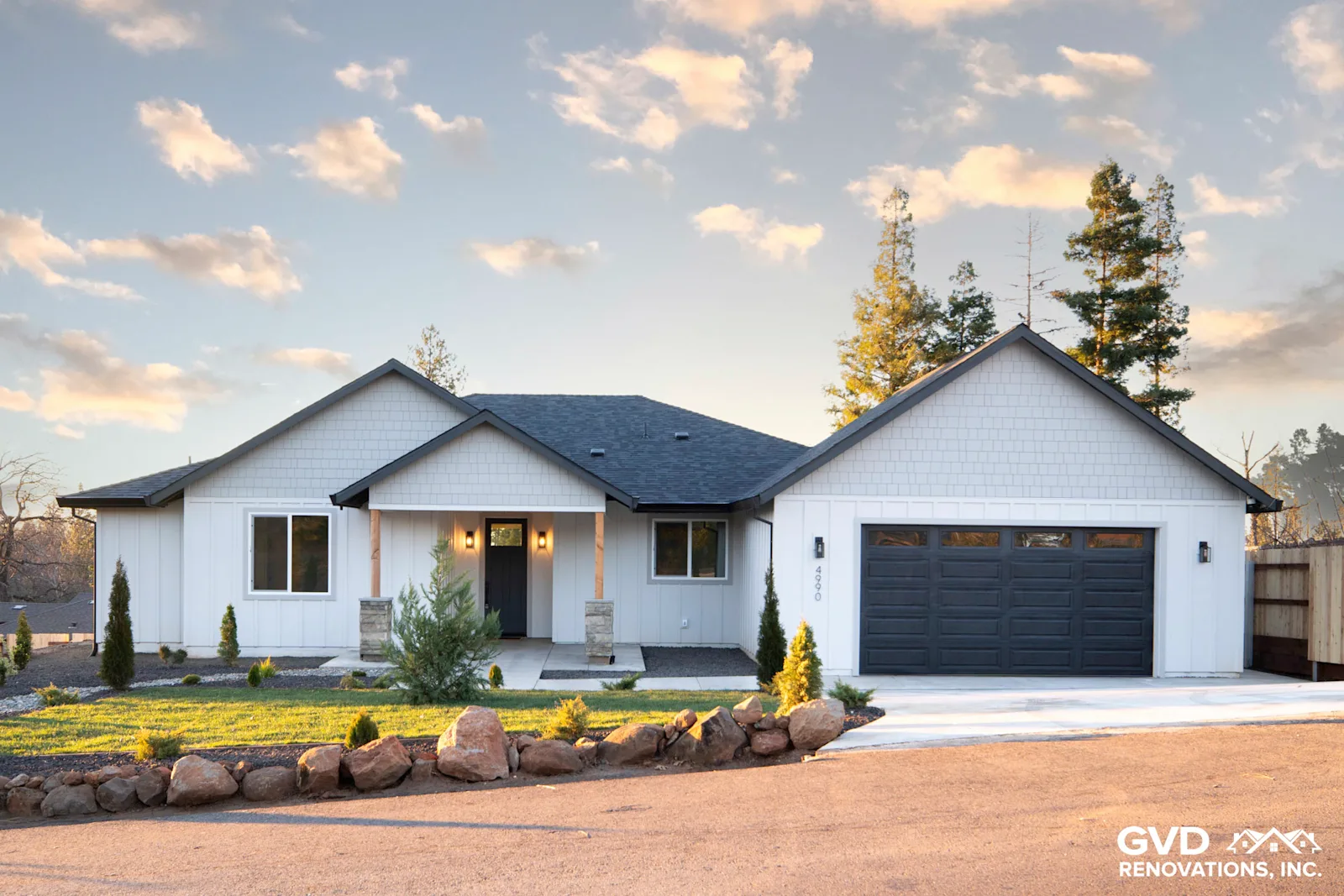
Wildfire defense for your home, built to California's fire code
Our free guide explains California's wildfire building code (formerly "Chapter 7A") in plain English: how to check your zone, what the rules ask of your siding, windows, eaves, vents and deck, and which upgrades your insurer has to recognize.








"Chapter 7A" has a new home
Since January 1, 2026, California's wildfire building rules are no longer in Chapter 7A of the Building Code. They moved into a new, separate code: the California Wildland-Urban Interface Code (Title 24, Part 7). The same 2026 update extended the rules to High fire hazard zones in cities and towns, not only Very High ones, and dropped an exception for homes built before 2008. The material rules carried over; the reach got wider.
Know where your home stands before you spend a dollar
- How to check your fire hazard zone in two minutes
- What the code asks for, part by part, on one page
- What triggers the code when you remodel
- The upgrades California insurers must recognize, and how to ask for your score
- A printable checklist to walk around your house with
Written by the team that re-sides and re-windows homes across Northern California's fire country, with every rule linked to the official source. Useful whether you hire us or not.
A short, printable guide to the rules, your zone and your insurance. Free, no obligation.
Does the wildfire code apply to your home?
It depends on your address, not your city. Three steps:
Look up your address
The State Fire Marshal's map shows whether your home is in a Moderate, High or Very High fire hazard zone. The 2025 maps added zones in places that had none before, including parts of Rocklin, Roseville, Loomis and Lincoln.
Open the fire hazard mapCheck which zones are covered
The code covers every zone in State Responsibility Areas (mostly rural land), High and Very High zones in cities and towns, and any area your city or county adds. Local rules can be stricter than the state's.
Know what triggers it
The state code is written mainly for new buildings and re-roofs: replacing half or more of a roof within a year brings the whole roof under the rule. For re-siding, new windows or a new deck on an existing home, your building department decides whether the wildfire rules apply, so we check with them before we quote.
How homes catch fire
The Insurance Institute for Business & Home Safety calls embers and wind-blown burning debris by far the most common wildfire threat to homes. In a federal study of homes lost in two San Diego County fires, about two-thirds were set on fire, directly or indirectly, by embers.
That's why the code, and the insurance rules, go part by part: one open vent or a pile of leaves against the wall can matter more than the siding itself.
Embers blow into attic, eave and foundation vents without fine metal mesh or ember-resistant covers.
Leaves and needles in gutters and roof valleys catch embers that land on them.
Mulch, plants, firewood and wood fences next to the house carry fire to the wall.
Debris on and under a deck ignites, and the deck carries fire to the wall it is attached to.
Gaps at joints and the bottom of the wall let embers lodge against what can burn.
What the wildfire code asks for
A plain-English summary of Chapter 5 of the Wildland-Urban Interface Code. Products must be listed by the State Fire Marshal or backed by a current test report, and we check that for every product we install.
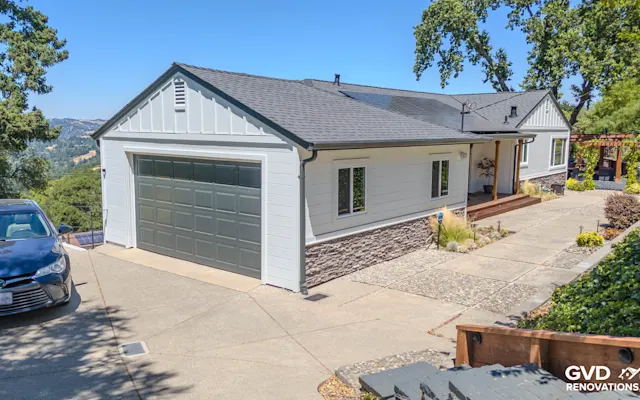
Siding and exterior walls
Siding that is noncombustible or ignition-resistant, or a wall assembly that passed the state's fire tests (one approved route is a layer of 5/8-inch Type X gypsum sheathing behind the siding). Paint, stain or coatings don't count as protection.
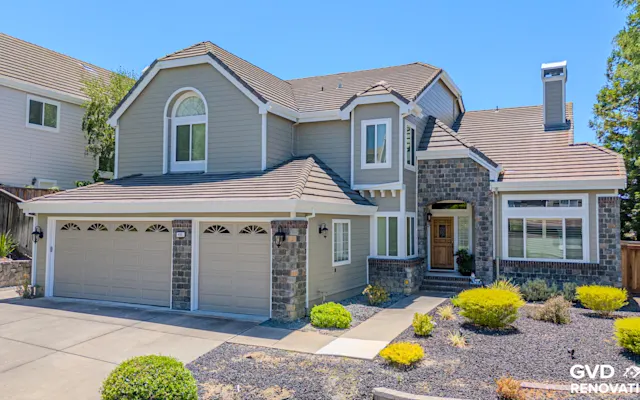
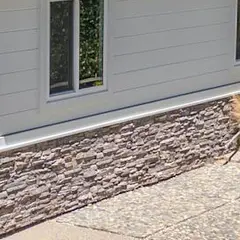
Base of the walls
At least 6 inches of metal flashing or other noncombustible material where the wall meets the ground, a deck or a roof.
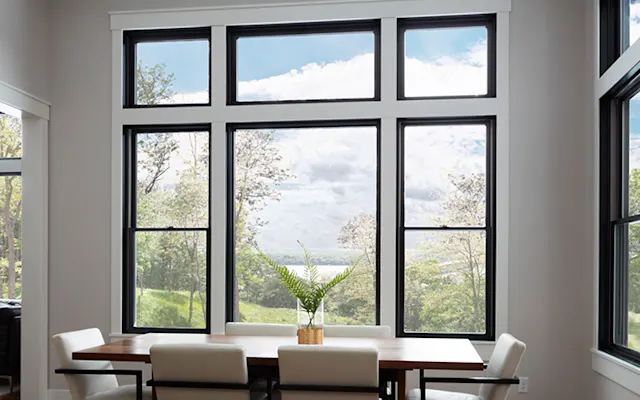
Windows and glass doors
Multi-pane glass with at least one tempered pane, glass block, glass with a 20-minute fire rating, or a window tested to the State Fire Marshal standard.
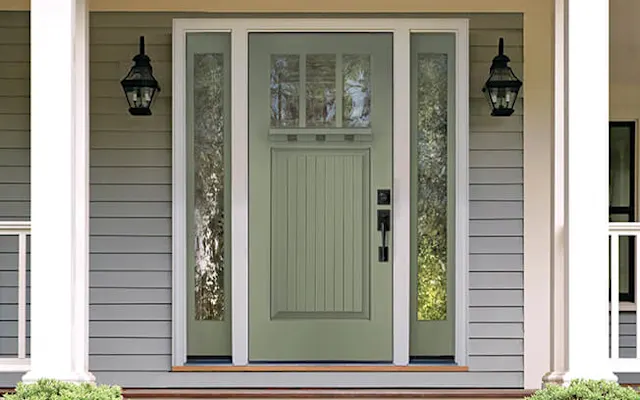
Exterior doors
A noncombustible door, a solid-core wood door at least 1¾ inches thick, a 20-minute rated door, or a door with a tested exterior surface. Glass in the door follows the window rule.
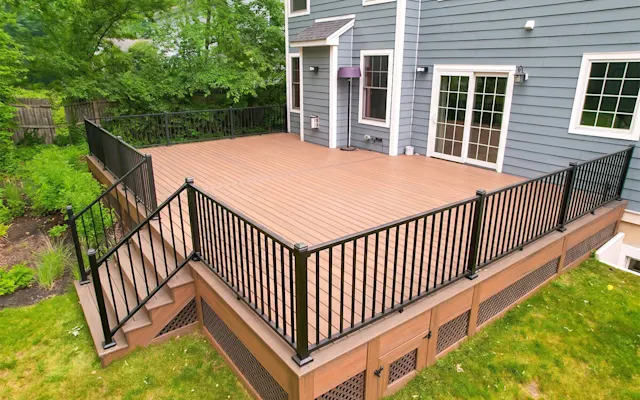
Decks
Deck boards that pass the state's deck fire tests, or are ignition-resistant, fire-retardant-treated or noncombustible, plus 6 inches of metal flashing where the deck meets the house.
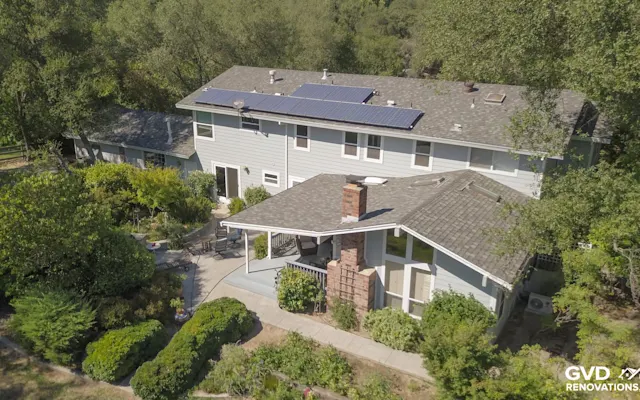
Eaves and soffits
Enclosed eaves need an underside of noncombustible or ignition-resistant material, or another approved assembly, and a fascia.
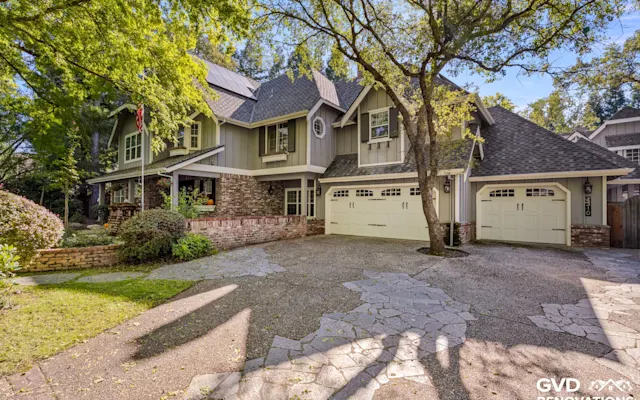
Vents
Attic, eave and foundation vents listed by the State Fire Marshal as flame- and ember-resistant, or tested to ASTM E2886. Some roof vents can use metal mesh with openings between 1/16 and 1/8 inch.

Roof and gutters
A Class A roof. Replacing half or more of the roof within 12 months triggers the full rule. Gutters and downspouts must be noncombustible, with a guard that keeps leaves out.
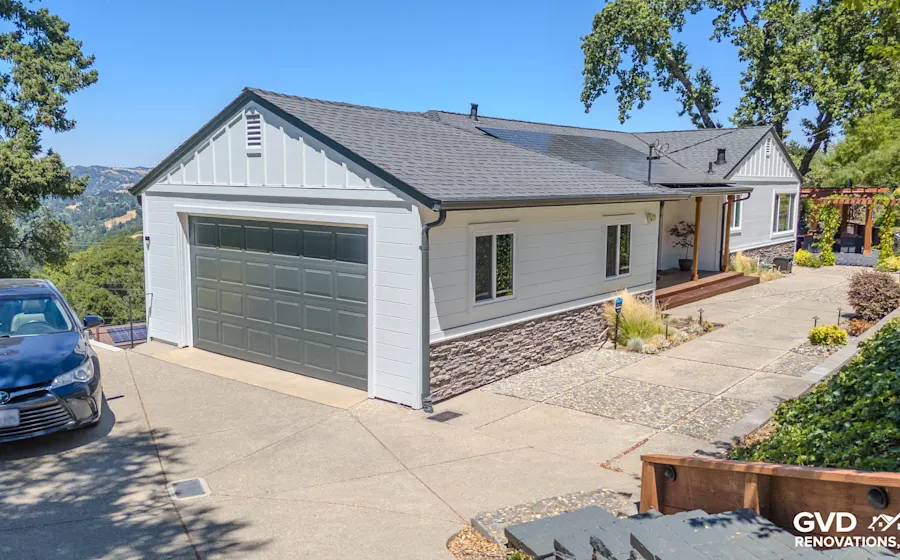
Summary only. The code has more options and exceptions than fit here; see the sources at the bottom of this page. Photos are GVD projects.
Siding materials compared for fire zones
Fire resistance ratings from the US Department of Energy's Building America guide. Code notes from the State Fire Marshal's product list and each manufacturer's own documents.
 Fiber cement (James Hardie)
 Stucco
 Brick and stone veneer
 Metal
 Wood
 LP SmartSide (engineered wood)
 Vinyl
For homes near wildfire-mapped areas we recommend fiber cement, and we're a James Hardie Elite contractor. James Hardie siding
Upgrades California insurers have to recognize
Since October 2022, California regulations require home insurers to reflect wildfire mitigation in their rates. The Department of Insurance calls the list Safer from Wildfires. Insurers also have to give you your wildfire risk score, tell you which steps would lower it, and let you appeal it.
The rules don't set a discount amount, so savings vary by insurer. The California FAIR Plan offers up to 20% off the wildfire portion of its premium for qualifying upgrades.
- Class A roof
- Enclosed eaves
- Ember- and fire-resistant vents
- Multi-pane windows (or shutters)
- 6 inches of noncombustible material at the base of the walls
- Nothing that burns within 5 feet of the house
- Clear leaves and debris under decks
- Sheds and other combustible structures at least 30 feet away
- Defensible space that meets state law
Living in a Firewise USA site or a recognized Fire Risk Reduction Community also counts.
- Ask for your wildfire risk score and the mitigation discounts in their rating plan.
- Do the upgrades, and keep your invoices and photos.
- Ask them to re-score your home. If you disagree, you can appeal.
We're a contractor, not an insurance agent. Your insurer decides your rate.
Choosing a contractor for fire-zone work
Look the contractor up on the Contractors State License Board site, and make sure the name matches your contract. CSLB
The CSLB suggests getting at least three bids. CSLB
For home improvement work, California caps the down payment at $1,000 or 10% of the price, whichever is less. CSLB
Ask which products they will use and for each product's State Fire Marshal listing or test report.
Ask how they will handle vents, eaves, the base of the walls and the deck-to-wall flashing, not just the siding.
A written scope that names the siding, windows, vents and flashing gives you a record for your insurer.
Keep a hardened home working
Hardening isn't a one-time job. These come from CAL FIRE's low-cost retrofit list and FEMA's homeowner guide.
- Clear leaves and needles from the roof, gutters, deck and the base of the walls, especially before fire season.
- Keep vent screens clean and undamaged.
- Caulk or plug gaps wider than 1/8 inch in the siding and around exposed rafters.
- Check siding for dry rot, cracks and warped boards, and replace damaged pieces.
- Keep the 5 feet around the house, and around and under decks, free of anything that burns. Swap wood mulch there for gravel or stone.
- Store firewood at least 30 feet from the house.
Homes we've built and re-sided in fire country


“Nik Shvaya and both crews were very professional and took care of all of our needs. The siding came out very well, and I think I would recommend that to other individuals who would like this type of siding on their home. The second crew that did the covering over the deck and our hot tub area was totally exceptional. Their young man in charge of that, David, was absolutely unbelievable for his age and his professionalism in all the cuts and putting everything together that needed to be taken care of. We would like to thank GVD and both crews, and especially Nik, for taking care of our important . We hope do the other improvements to our home and Truckee in the years to come. Thanks again, Nik.”
 Posted on Google
“Patrick and Vadim were amazing to deal with. They walked us through the entire process and helped us make the best and most informed decisions for what would work for us. We had been getting additional estimates for other work besides redoing our siding, and they were able to also provide those services at a slightly cheaper rate and coordinated all aspects of the full project. The work crews were very respectful and did great work.”
 Posted on GuildQuality

“Great work, We are satisfied with the work that was done. We have a beautiful bathroom and enjoying it.”
Posted on Google

“GVD renovated our master bedroom, master walk in closet, master bathroom, guest bathroom, put all new hardwood flooring through out our home, raised a ceiling and a few other things I can't even think of, my point is there's nothing they can't do! We chose them not because they were the cheapest or most expensive, we chose then because you can tell they know what their doing, they care about making you happy and I felt safe leaving my home and fur babies everyday in their hands. Thank you Vlad for making this experience a positive one. We are in love with all the new spaces you created! Hands down we will use GVD for the few things left we need to do on our home in the near future. We will highly recommend you for years to come!”
 Posted on Yelp

“I can't begin to say enough good things about the work and level of care they took in my project, I made a great choice when I went with GVD”
Posted on Google
“My wife and I found GVD Renovations at the Northern California Home & Landscape Expo Sunday January 26th. I am giving GVD Renovation and its team the most glowing recommendation I have ever given any contractor before as I have never had this much ease, to include total job satisfaction, and as well as billing satisfaction with a contractor. Thank you all so very much. I have been recommending you to all my family and friends and will be keeping your number close for any future projects.”
 Posted on Angie's List

“I hired GVD to replace my tile kitchen countertops with quartz. There bud was far lower than other companies and they were able to promise and complete the job quickly. They were thoroughly professional and the new countertops are beautiful.”
Posted on Google
“I am very pleased with their service and work. I contracted with GVD to replace 10 windows with vinyl windows, install vinyl soffits, replace rotted trim and install new siding for my home. From the very beginning, our entire experience was great. The siding installation crews performed their work in a timely and orderly fashion and kept the work area clean and free of debris. The installed siding added a beautiful touch and brought out the most in our house. I am very happy to have this project completed. I referred them to my friends and would gladly do business with them again.”
 Posted on Facebook
Wildfire code questions
Is Chapter 7A still the law in California?
The rules are, but not under that name. Since January 1, 2026, the wildfire building rules that were in Chapter 7A of the California Building Code (and Section R337 of the Residential Code) are in the California Wildland-Urban Interface Code, Title 24 Part 7, Chapter 5. Most contractors and inspectors still call them "Chapter 7A".
Does the wildfire code apply to my home?
It applies in every fire hazard zone in State Responsibility Areas, in High and Very High zones in Local Responsibility Areas, and in any area your city or county designates. Look up your address on the State Fire Marshal's fire hazard map. The 2025 maps added zones in places that had none before, including parts of Rocklin, Roseville, Loomis and Lincoln.
If I only replace my windows or siding, do I have to meet the code?
It depends on your building department. The state wildfire code is written mainly for new buildings and re-roofs, and the 2026 update removed an old exception for homes built before July 2008. Whether a re-side or window replacement has to meet it is your building department's call, so we confirm the requirements for your address before we quote.
Can I paint or spray my siding to make it fire-resistant?
Not for code purposes. The wildfire code says paints, coatings and stains are not an approved method of protection. The material itself, or the wall assembly behind it, has to qualify.
Is James Hardie siding approved for California's wildfire code?
James Hardie's ICC-ES evaluation report (ESR-2290) classifies HardiePlank, HardieShingle and Artisan siding as noncombustible under ASTM E136, with a Class A flame-spread rating, and several Hardie siding and soffit products are on the State Fire Marshal's list of products for wildfire areas. James Hardie notes that the fire resistance does not extend to paint or coatings, and your building official approves the product for your permit.
Will hardening my home lower my insurance?
California requires insurers to recognize specific wildfire mitigation in their rates, and to tell you your wildfire risk score and which upgrades would lower it. The regulation doesn't set a discount amount, so it varies by insurer. The California FAIR Plan offers up to 20% off the wildfire portion of its premium. Ask your insurer for your score before and after the work.
What is Zone 0?
Zone 0 is the 5 feet right around your house. State law calls for an ember-resistant zone there, but as of November 2026 the Board of Forestry's detailed rules are still being finalized and are not in effect. Keeping that strip free of anything that burns is still one of the steps insurers recognize.